
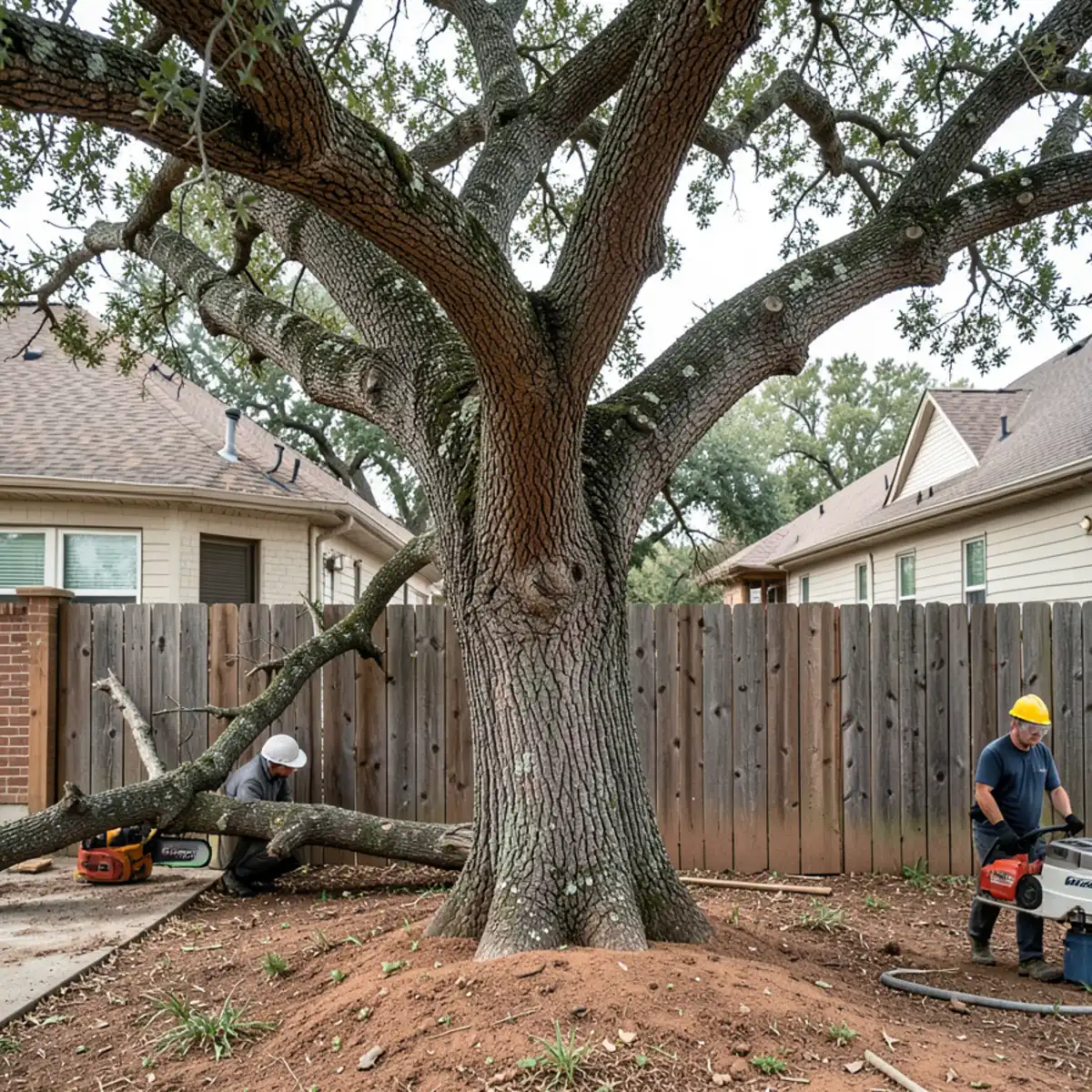
Direct Answer & Local Summary
Under Texas property law and standard insurance doctrine, when a healthy tree falls across a property line due to a severe storm, tornado, or high wind event, it is legally classified as an 'Act of God.' In this situation, your neighbor is not legally liable for the damage. Instead, you must file a claim through your own homeowners insurance policy to cover tree removal and repairs to your house, fence, or garage. The neighbor's insurance only covers the portion of the tree remaining on their own land. However, an important exception exists: if the tree was visibly dead, rotting, or severely diseased prior to the storm, and you had provided documented written notice to your neighbor of the hazard, your neighbor (and their insurer) may be held liable for negligence.
Key Takeaways for Property Owners
- •Act of God Rule: If a healthy tree falls during a storm, each homeowner files through their own insurance for damage on their property.
- •The Boundary Line Rule: You are responsible for removing the wood that landed on your property, while the neighbor handles what fell on theirs.
- •Negligence Exception: If a neighbor ignored documented written warnings about a dead or hazardous tree, liability can shift to them.
- •Document Everything: Photograph the tree's root plate, trunk interior, and property line before removing any debris.
The Texas 'Act of God' Doctrine in Tree Law
In Texas jurisprudence, unexpected natural events like severe thunderstorms, ice storms, and straight-line downbursts are considered Acts of God (force majeure). The law recognizes that a property owner cannot control nature.
Therefore, if your neighbor's tree appeared healthy, had green foliage, and had no obvious structural decay, the neighbor cannot be found negligent simply because a 70 mph windstorm uprooted it onto your roof or fence.
Need Tree Assistance in Fort Worth?
Free telephone connection with independent local tree service pros.
How Homeowners Insurance Handles Property-Line Trees
When a neighbor's tree falls onto your property in Fort Worth, standard Texas homeowners insurance policies (such as HO-B or HO-3 forms) apply as follows:
• Damage to Your House or Garage: Your policy pays to repair the structure (subject to your deductible) and covers reasonable costs to lift and haul the tree off the building.
• Damage to Fences: Shared boundary fences are typically split between both neighbors' insurance policies or negotiated amicably.
• Tree Debris in Your Yard (No Structure Damage): If the tree fell harmlessly in your grass without striking a covered structure, most policies provide limited debris removal coverage ($500 to $1,000 maximum).
The Negligence Exception: When the Neighbor IS Liable
Your neighbor is only held legally liable under Texas law if you can prove actionable negligence. To establish negligence, you must demonstrate:
1. The tree exhibited visible, obvious signs of death, heavy decay, or severe structural compromise before the storm.
2. The neighbor knew or reasonably should have known about the hazard.
3. The neighbor failed to take reasonable steps to mitigate the danger.
Having sent a certified letter, email, or written arborist inspection report to the neighbor prior to the storm provides the legal evidence insurance adjusters and small claims courts require to subrogate costs.
What Are Your Rights Regarding Overhanging Branches in Texas?
Under Texas property law, you have the legal right to trim any branches that extend across your property boundary line, up to the vertical property line plane.
However, you may not trespass onto your neighbor's land without permission, and your pruning must not be so severe that it permanently injures or kills the tree. Pruning should follow ANSI A300 standards.
Expert Dispute Resolution: How to Document Pre-Storm Hazards Without Hostility
Handling a hazardous neighbor's tree before it falls requires diplomacy backed by rigorous legal documentation. In Texas, verbal complaints carry almost no legal weight with insurance adjusters after a storm occurs.
The most effective approach is hiring an independent ISA-certified arborist to conduct a formal Tree Risk Assessment (TRAQ). Providing a courteous copy of this professional report to your neighbor via certified mail puts them on formal legal notice. This single step eliminates the Act of God defense and motivates reasonable homeowners to address dangerous deadwood before severe weather strikes.
Frequently Asked Questions: Neighbor's Tree Fell on Your Property in Texas: Who Pays?
Straightforward answers grounded in Texas municipal codes, insurance standards, and regional forestry guidelines.
Can I legally force my neighbor in Texas to cut down a dead tree leaning toward my house?
Who pays to repair a shared boundary fence crushed by a fallen tree in Texas?
If I trim branches hanging over my property line, can my neighbor sue me?
RAM Tree Service Editorial Desk · Fort Worth, TX
Researched from municipal forestry ordinances, Texas A&M Forest Service data, and ISA arboricultural standards. For on-site estimates, call our dispatch line at (321) 677-9055.
Official References & Forestry Authorities Cited
Our editorial team consults municipal codes, state forestry extensions, and industry standards to ensure guidance reflects current North Texas conditions:
- •Texas Department of Insurance (TDI): Consumer Rights Regarding Storm Damage and Fallen TreesOfficial regulatory overview of Texas homeowners insurance coverage for fallen trees.
- •State Bar of Texas: Texas Property Law and Encroachment GuidelinesLegal analysis of tree overhang rights and premises liability under Texas common law.
- •International Society of Arboriculture (ISA): Property Line Tree Dispute ResolutionArboricultural standards for boundary line assessment and hazard mitigation.